Choosing a roof involves more than just looking at the price or the appearance of the material. The type of roof, its condition, its slope, weather conditions, the desired lifespan, and your budget are all factors to consider.
On Montreal’s South Shore, a roof must also be designed to withstand our changing seasons, including snow, rain, wind, freeze-thaw cycles, and exposure to UV rays.
This guide outlines the key factors to consider when choosing a roofing system that’s right for your home and your project.
1. Assess the condition of your current roof
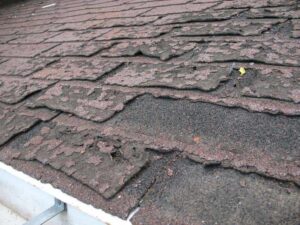
Before choosing a new roof, you first need to know what condition your current roof is in.
One roof may need a localized repair, while another may have reached the end of its useful life and require more extensive repairs.
An assessment makes it possible, in particular, to verify:
- the condition of the pavement;
- roof bridging
- flashings;
signs of water infiltration; - damaged or deteriorated areas.
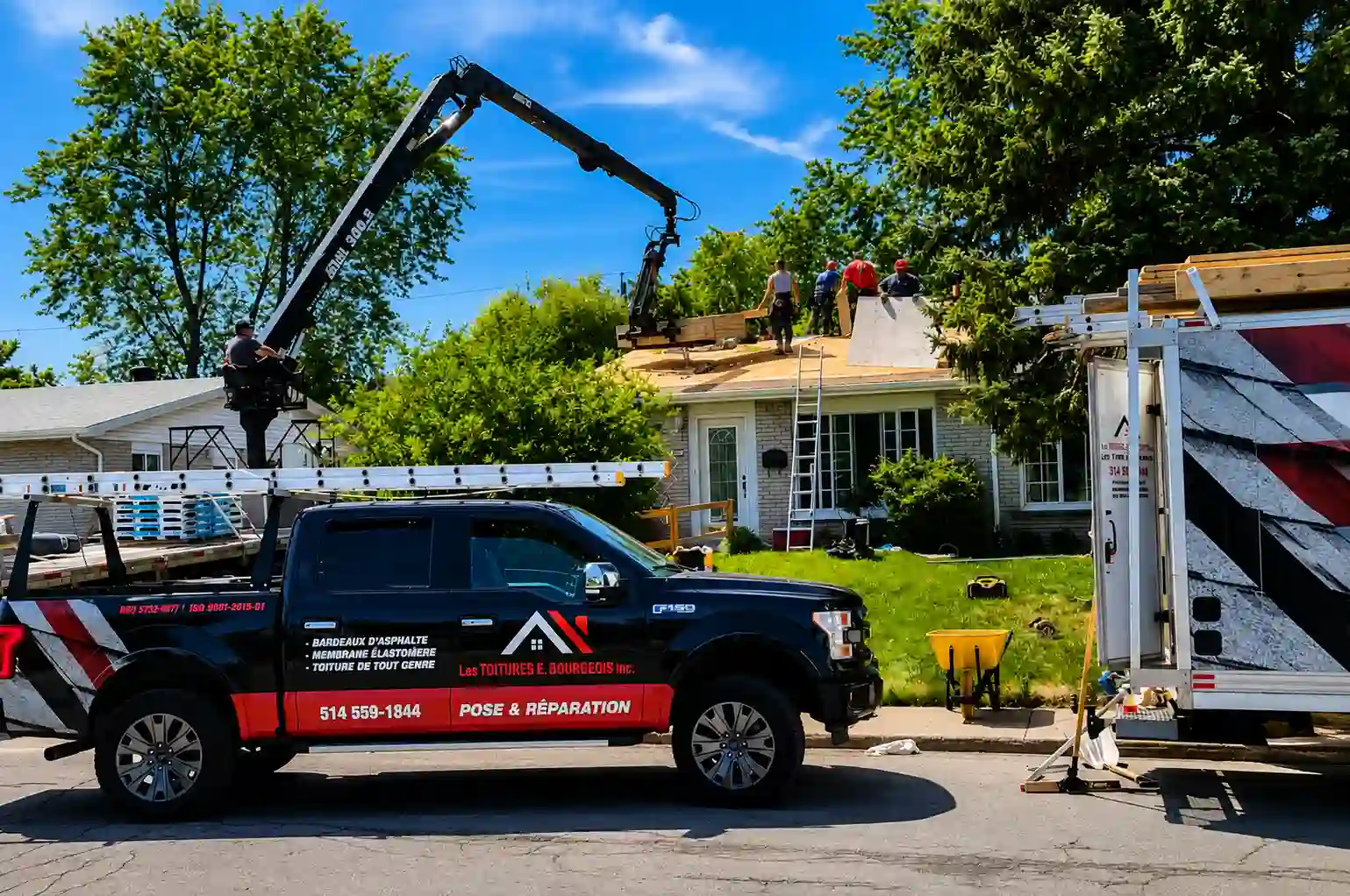
During a renovation, the deck can be inspected and repaired as needed before the new roofing material is installed. Preparing the roof and inspecting its condition are important steps to take before installing new roofing.
This step therefore helps determine what work is needed before choosing a new roofing system.
2. Consider the type and slope of the roof
The type and slope of your roof determine which roofing solutions are suitable.
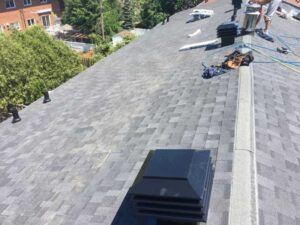
A sloped roof, for example, can be covered with asphalt shingles. For a flat roof or low-slope roof, various membrane systems designed for this type of roof can be used instead.
The slope, therefore, is not just a matter of appearance. It influences the choice of roofing system and how water is drained.
Before choosing a roofing material, you should therefore start by determining what type of roof you have and which solutions are suitable for its design.
3. Consider the climate and weather conditions
In Quebec, a roof must be able to withstand a variety of weather conditions throughout the year. Snow, wind, rain, freeze-thaw cycles, and the sun’s UV rays are among the factors to consider before choosing a roofing system.
These conditions can contribute to the aging of the various components of the roof. It is therefore important to consider the durability characteristics of the chosen system, particularly its ability to withstand water, wind, temperature fluctuations, and UV rays.
For a flat roof, water management is also important. Drains and waterproofing are among the factors to consider when designing and installing the system.
4. Consider the entire roofing system
When choosing a roof, you shouldn’t just look at the material that’s visible from the outside. A roof is made up of several components that must work together.
Depending on the type of roof, the system may include, among other things:
- roof bridging
- the underlay;
- protective membranes;
- flashings;
- the drip edges;
- sealing components;
- drains and vents, depending on the system.
Surface preparation and the installation of these various components are part of roofing work. Professional industry documentation specifically mentions inspecting the deck, installing the underlayment, installing flashings, drains, and vents, as well as installing the finishing layer.
5. Compare the materials that are right for your roof
Once you’ve determined the type of roof, you can compare the materials and systems that are suitable for your project. Each option has its own characteristics, and the choice should be based on your roof and your priorities.
For a sloped roof, asphalt shingles are a common choice. The specific product chosen may vary depending on the desired features, appearance, durability, and budget. Industry literature typically associates asphalt shingles with sloped roofs.
When choosing a roofing system, you must therefore consider the entire roofing system, not just the material you see once the work is complete.
For flat or low-slope roofs, various roofing membranes can be used. Elastomeric membranes, for example, are part of two-ply roofing systems, while TPO is used in single-ply roofing systems.
When comparing your options, be sure to consider the following:
- the desired sustainability;
- weather resistance;
- the interview;
- the warranty;
- appearance;
- the cost of the project.
The goal is not to find a material that is the best in every situation, but to choose the roofing system that is right for your home and your project.
6. Assess the short- and long-term costs
The cost of a roof depends on more than just the material chosen. The roof’s surface area, its complexity, the condition of the existing roof, and the work required can also affect the price of a roof repair or replacement.
It’s therefore helpful to look at your roofing budget from two perspectives: what you need to invest now and what the roof can be worth in the long run.
Before comparing your options, ask yourself the following questions:
- How much would you like to invest?
- How long do you plan to stay in the house?
- What kind of lifespan are you looking for?
- What maintenance work will be needed?
- What is included in the proposal?
Two options may have different initial prices without offering the same features, the same lifespan, or the same maintenance requirements.
The most important thing, then, is to compare the total cost of the project—not just the price per square foot.
7. Take the complexity of the roof into account
The shape of your roof can also affect the scope of the work to be done. A simple roof with few details does not require the same amount of work as a roof with multiple slopes, valleys, dormers, a chimney, or multiple openings.
These elements require greater precision during installation, particularly when it comes to waterproofing details and connections.
That is why two houses with the same floor area may require different roofing work.
Before comparing prices or materials, it is therefore important to consider the configuration of your roof—not just its surface area.
8. Check the ventilation and condition of the attic
For a sloped roof, the condition of the attic and ventilation are also factors to consider.
Poor ventilation can be linked to various problems, including condensation, moisture, or frost buildup. Before or during a renovation, it may therefore be advisable to check whether the attic’s ventilation and insulation have any issues that need to be corrected.
This inspection helps ensure that we don’t just address the visible roofing material when the problem is actually beneath the roof.
9. Consider the quality of the installation
Choosing the right material isn’t enough. The installation must also be done correctly, and the various components of the system must be properly integrated.
Depending on the type of roof, this may include preparing the roof deck, installing the underlayment, installing flashings, sealing the accessories, installing the roofing material, and inspecting the work.
When asking for a roofing quote, it’s therefore a good idea to check what’s included in the work and what warranties are offered.
10. How do you actually choose your roofing?
There isn’t a single type of roofing that’s right for every home. The right choice depends on your situation, your current roof, and what you’re looking for in the coming years.
To help guide you, start with these questions:
- Is your roof sloped or flat? This helps identify which systems may be suitable.
- Is your roof still in good condition? Sometimes a repair may be sufficient, whereas a roof that has reached the end of its useful life may require a complete overhaul.
- How long do you plan to stay in the house? Your time horizon can influence how much weight you place on product lifespan and long-term cost.
- Which features are most important to you? You can prioritize durability, weather resistance, appearance, maintenance, or budget.
- What is the actual cost of the project? Compare bids by looking at the scope of work, the materials used, and the warranties, rather than just the price per square foot.
In practice, your decision should therefore start with the condition and layout of your roof, and then take into account your priorities and budget.
If you’re torn between several options, a roof assessment can help determine which solutions are truly right for your home.
Frequently Asked Questions About Choosing a Roof
What type of roof should you choose for a house in Quebec?
The choice depends primarily on the type of roof, its slope, the condition of the existing roof, and your priorities. Sloped roofs and flat roofs are not suitable for the same roofing systems.
What is the best material for a roof?
There is no single material that works for every home. Asphalt shingles, elastomeric membranes, and TPO membranes each meet different needs. You need to compare the options that are truly right for your roof.
How much does a new roof cost?
The cost varies depending on several factors, including the roof’s size, the type of roof, the material chosen, the roof’s complexity, and the work required. A quote will provide you with an estimate tailored to your roof.
How long does a roof last?
Lifespan depends, among other things, on the system used, the materials, the quality of the installation, and maintenance. You should therefore consider the desired lifespan when comparing the different options.
Is it better to repair or replace a roof?
It depends on the condition of the roof and the severity of the existing problems. An inspection will determine whether a repair is sufficient or whether a complete overhaul should be considered.
Which membrane should you choose for a flat roof?
Elastomeric membranes and TPO are among the options used for flat or low-slope roofs. The choice depends on the building’s characteristics, the desired system, and the project requirements.
Why should you have a roof inspected before replacing it?
An inspection allows you to check the condition of the roofing material, the deck, the flashings, and other roof components. It helps determine what work is needed before choosing a new roofing system.
Should price be the main factor in choosing a roof?
No. Price is important, but it shouldn’t be the only factor. You also need to consider the expected lifespan, maintenance requirements, weather resistance, the quality of the materials, and the installation. A lower quote isn’t necessarily the best option if it doesn’t include the same scope of work or the same materials.