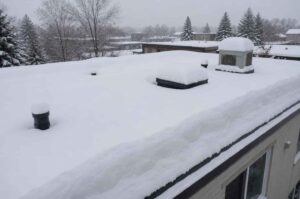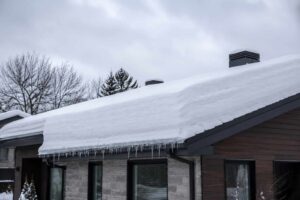

A flat roof does not necessarily need snow removal after every snowfall. The decision depends on snow buildup, weather conditions, the condition of the building, and whether meltwater can drain away.
During a Quebec winter, there is more to watch than the depth of the snow. Rain, thaws, and ice can change conditions on the roof. On a flat roof, drains and water drainage paths need particular attention.
Here are the situations to watch for and the precautions that can help protect your building and its waterproofing membrane.
Does a flat roof need snow removal after every storm?
No. Snow on a roof does not automatically mean work is needed. Conversely, waiting until the snow reaches a specific depth does not establish whether conditions are safe.
There is no universal 30 cm threshold that applies to every building. Snow density, ice, how the snow is distributed, and the structure's characteristics must all be considered.
A series of storms, rain falling on a deep snowpack, or an unusual change inside the building may warrant an assessment. Past problems matter too: a roof that has leaked during previous thaws deserves closer attention.
Weather conditions and changes observed inside the building help determine when to remove snow from your roof in Quebec, beyond snow depth alone.
Why are roof drains important in winter?
Despite its name, a flat roof normally has a slope that directs water toward drains or other designated outlets.
During a thaw, some snow and ice may melt while the path to a drain remains blocked. Meltwater can then collect on the roof.
The maintenance manual of the Association des maîtres couvreurs du Québec describes this situation, including cases where ice melts faster near parapets — the low walls around the roof's edge — or equipment than it does near the drain.
Standing water can reach vulnerable connections or waterproofing areas and cause a leak. The concern therefore goes beyond the weight of the snow: water drainage must also be considered.
If water regularly collects in the same spot, the drainage of your flat roof should be checked. Removing snow may address an immediate need without fixing the underlying cause.
When should you have your roof checked?
Some conditions call for particular attention:
- Heavy or unusual snow buildup after several storms.
- Rain or a thaw when there is already a substantial snowpack.
- Leaks that appear during a thaw.
- A known water drainage problem.
- Ice buildup that returns to the same spot.
- A sudden change inside the building.
Unusual cracking sounds, sagging, new cracks, or doors that suddenly stick can signal a structural load problem. These signs should not be treated as a routine maintenance request.
If you suspect a structural danger, do not go onto the roof. If the danger is immediate, leave the building and call 911. An assessment by a qualified structural professional may be needed.
A water stain alone does not establish that the roof is overloaded. It means the source of the water should be investigated.
How can you protect a modified bitumen or TPO membrane during snow removal?
A roof with a modified bitumen or TPO membrane needs snow removal methods suited to the roofing material and the conditions on site.
The goal is not to scrape the roof until it looks the way it does in summer. Overly aggressive work can damage the membrane, seams, or connections around drains and equipment.
Precautions include:
- Avoiding sharp or pointed tools that could puncture the roofing.
- Not using an open flame to remove ice.
- Leaving a protective layer of snow when the method and conditions allow it.
- Locating drains, vents, skylights, and equipment before work begins.
- Following the recommendations that apply to the roofing system.
A low slope does not eliminate the risk of falling. Roof edges and openings may be hard to see under snow. The CNESST emphasizes planning work on a flat roof and protecting the area on the ground where snow and ice will be deposited.
When work is needed, our roof snow removal service on Montréal's South Shore can help define the work according to your building and current conditions.
What should you do if water leaks in during a thaw?
A leak during a thaw may be related to blocked drainage, a damaged connection, or another waterproofing defect. The place where water appears inside does not necessarily match its point of entry on the roof.
Snow removal is not automatically a substitute for a repair. It may help limit an immediate problem, but the cause of the leak still needs to be found.
If water is currently entering your building, mention it when you call. Our emergency roof repair service after a disaster is available 24 hours a day, 7 days a week. Depending on the nature of the problem and our team's availability, we may be able to respond quickly to limit damage.
For a roofing emergency, call (514) 559-1844.
If the leak keeps returning or is hard to explain, a roof inspection can help identify its likely source. Diagnosis and reports are paid services; their scope and price are explained before the visit. A quote for the cost of roofing work is free.
How should you prepare a flat roof for winter?
An inspection before the cold season can reveal problems while the roof is still clear.
Depending on the building, it may cover:
- Debris that could interfere with water drainage.
- The visible condition of drains and their connections.
- Membrane seams and flashing.
- Roof penetrations around vents and equipment.
- Areas where water collected during the year.
- Previous repairs and reported leaks.
If a defect is found, roof repair or maintenance may be considered before snow makes it harder to access and inspect the roofing.
Observations made throughout the seasons are useful. Note when a leak appears: during rain, during a thaw, or after snow buildup. This information will help the roofer understand the situation.
Frequently asked questions about flat roof snow removal
Do you need to remove all the snow from a flat roof?
Not necessarily. The work should address the problem you have observed while protecting the membrane. Snow removal does not always mean exposing the entire roof surface.
Can a frozen drain cause a leak?
Yes. If ice prevents meltwater from reaching the drain, water can collect and reach a vulnerable waterproofing area. The blockage and the condition of the roofing should be assessed.
Can you remove snow from a membrane roof yourself?
Going onto a snow-covered roof carries risks of falls and damage to the roofing. A flat roof is not automatically a safe work surface because it has a low slope. Access, openings, and protective measures should be assessed before any work begins.
Does a winter leak mean the roof needs replacing?
No. A leak may come from a localized problem. Its cause and the extent of the damage should be assessed before deciding whether to repair or replace the roof.
Have a question about your flat roof this winter?
Have you noticed unusual snow buildup, a leak during a thaw, or a problem that returns every winter?
Call Les Toitures E. Bourgeois at (514) 559-1844. Describe your building and what you have noticed. Our team will help identify the right service: snow removal, repair, or inspection.
Technical references
- Régie du bâtiment du Québec — Removing snow or ice from roofs: a matter of safety, February 26, 2025. (In French)
- CNESST — Removing snow from a roof. (In French)
- Association des maîtres couvreurs du Québec — Maintenance manual, 2019 edition, pages 23 and 24. (In French)