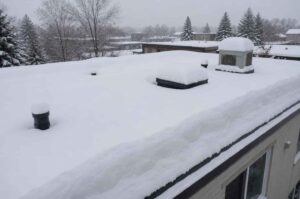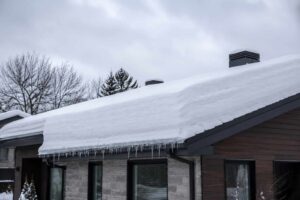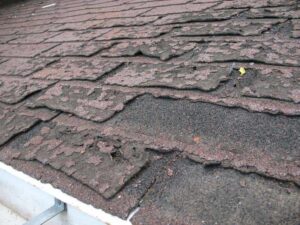

In winter, thick ice can often build up along the edge of a roof. Although this is common in Quebec, it can cause water infiltration and damage some roof components.
An ice dam generally forms when snow melts on a warmer section of the roof, then refreezes as it reaches a colder area near the edge. Meltwater can then become trapped behind this buildup.
Why does this problem keep occurring on some homes? More importantly, how can it be addressed without damaging the roof? Here are the causes to understand and the solutions to consider.
What Is an Ice Dam on a Roof?
An ice dam is a buildup of ice that forms mainly along the lower edge of a sloped roof, near the gutters or eaves.
It forms when meltwater flows towards the roof edge and refreezes before it can drain away.
Over time, this ice can form a barrier that holds water on the roof above it.
Roofs are designed to shed water as it flows downwards. Asphalt shingles are not intended to withstand water trapped behind ice indefinitely.
Water can then seep beneath the shingles and reach the components underneath.
Why Do Ice Dams Form on Some Roofs?
Several factors can contribute to ice buildup along a roof edge. The problem is often related to temperature differences between the upper part of the roof and its edges.
1. Heat Loss from the Home
When warm air escapes from the home into the attic, it can warm the roof deck.
Snow touching this surface then begins to melt, even when the outdoor temperature remains below freezing.
Water flows towards the roof edge, which is generally colder because it extends beyond the heated exterior walls. It can then refreeze and begin to form an ice dam.
Air leaks around the attic hatch, plumbing penetrations and other ceiling openings can contribute to this process.
2. Insufficient Attic Insulation
Inadequate insulation can allow heat to escape towards the roof.
The problem may be more pronounced when insulation is unevenly distributed or insufficient near the roof edges.
Even if the attic appears well insulated, gaps in the insulation or air leaks can allow heat to escape.
3. Inadequate Attic Ventilation
Ventilation helps keep the attic colder during winter.
When vents are blocked or airflow is insufficient, some areas of the roof deck can remain warmer.
Soffits, ventilation baffles and roof vents all play a role in air circulation.
However, adding vents does not automatically solve the problem. Air sealing, insulation and the attic layout must be checked first.
4. Roof Layout and Weather Conditions
Roofs with multiple slopes, valleys, dormers or wide eaves can have areas where snow tends to accumulate.
Thaws, sunlight and temperature fluctuations can also contribute to melting and refreezing.
An ice dam therefore does not necessarily indicate an insulation problem. Several factors may be involved.
Ice Dams: What Are the Possible Causes and Solutions?
| Possible cause | Effect on the roof | Solution to consider |
|---|---|---|
| Air leaks into the attic | Roof deck warming and snowmelt | Improve air sealing at the ceiling |
| Insufficient insulation | Heat loss towards the roof | Have the insulation checked and corrected |
| Inadequate ventilation | Uneven attic temperatures | Check soffits, baffles and vents |
| Snow buildup | Melting and refreezing near the edges | Assess whether snow removal is needed |
| A thaw followed by freezing | New layers of ice forming | Monitor buildup and signs of water infiltration |
| Valleys and dormers | Localized buildup and disrupted drainage | Have problem areas inspected |
Key point: removing ice can address an immediate problem, but when ice dams return every winter, their cause needs to be investigated.
What Damage Can an Ice Dam Cause?
The main risk is water infiltration beneath the roof covering.
When meltwater remains trapped behind ice, it can seep through shingle joints or areas with inadequate waterproofing.
Moisture can then reach the roof deck, insulation and some interior components of the building.
Water Infiltration into the Attic
Water infiltration may first appear in the attic before becoming visible in the rooms below.
Water can travel along the roof deck or structural components and appear far from its entry point.
Damage to Ceilings and Walls
Moisture stains, peeling paint or damaged finishes may indicate that water has entered the building.
Persistent water infiltration can also damage insulation and lead to moisture problems.
Damage to Shingles and Gutters
Ice buildup can put stress on roof edges and gutters.
Using unsuitable tools can also damage shingles, flashing or waterproofing membranes.
When water infiltration is detected, roof repairs may be needed to fix the damage and restore watertightness.
How Can an Ice Dam Be Removed from a Roof?
Ice must be removed carefully. A snowy or icy roof presents a serious fall risk, and some methods can damage the roof covering.
In particular, avoid striking ice with an axe, pick or other sharp tool. Doing so can damage shingles and compromise watertightness.
Depending on the situation, a professional can determine whether localized ice removal or partial snow removal is needed to help water drain.
On Montreal’s South Shore, Les Toitures E. Bourgeois offers roof snow and ice removal adapted to the roof covering and winter conditions.
A one-time intervention aims to reduce immediate risks, without claiming to permanently eliminate the cause of ice formation.
How Can You Keep Ice Dams from Returning Every Winter?
When an ice dam regularly forms in the same place, it is best to investigate the source of the problem rather than remove the ice year after year.
Improve Attic Air Sealing
Openings around ducts, electrical wires, access hatches and other penetrations can allow warm air from the home to rise into the attic.
Sealing these leaks helps reduce heat loss towards the roof.
Check the Insulation
Continuous, adequate insulation helps limit heat transfer from heated rooms into the attic.
Pay particular attention to the roof edges, where space for insulation may be limited.
Check the Ventilation
Soffits and vents must provide airflow suited to the roof layout.
In particular, make sure insulation does not block the ventilation openings.
However, ventilation does not replace proper air sealing.
Check Membranes and Waterproofing Components
During reroofing work, a self-adhering ice and water protection membrane can help reduce the risk of water infiltration in vulnerable areas.
This membrane does not directly prevent ice dams from forming. It provides additional protection when water is temporarily trapped on the roof.
If the roof covering is damaged or water infiltration keeps occurring, roof renovation or replacement may be considered, depending on the condition of the materials.
Temporary Ice Removal or a Lasting Solution: What Is the Difference?
| Intervention | Purpose | Limitation |
|---|---|---|
| Localized ice removal | Remove problematic ice buildup | Does not necessarily address the cause |
| Targeted snow removal | Reduce the snow that feeds meltwater | May need to be repeated |
| Improved air sealing | Reduce heat loss into the attic | Requires an assessment of air leaks |
| Insulation improvements | Limit warming of the roof deck | Must maintain adequate ventilation |
| Ventilation improvements | Promote adequate airflow | Do not replace insulation or air sealing |
| Roof covering repairs | Repair damaged or vulnerable areas | Do not eliminate ice formation on their own |
In many cases, a combination of measures is needed to reduce ice dam formation over the long term.
Frequently Asked Questions About Ice Dams
Is It Normal to Have Icicles Along the Roof Edge?
Icicles can form during freeze-thaw cycles. Their presence does not automatically mean an ice dam has formed. However, significant or recurring buildup deserves particular attention, especially if accompanied by signs of moisture.
Can an Ice Dam Cause a Leak?
Yes. When meltwater remains trapped behind ice, it can seep beneath shingles or through a vulnerable waterproofing area and reach the attic or ceilings.
Does All the Snow Need to Be Removed to Eliminate an Ice Dam?
Not necessarily. Targeted ice removal or partial snow removal may sometimes be enough to limit the immediate problem. The work must be adapted to the roof layout and observed conditions.
Does Better Ventilation Prevent Ice Dams?
Adequate ventilation can help reduce ice dam formation, but it is not a universal solution. Attic air sealing and insulation are also essential.
Does an Ice Dam Mean the Roof Needs to Be Replaced?
No. Ice does not automatically mean that the shingles or roof deck are damaged. An inspection can assess the condition of the roof covering and determine whether repairs are needed.
If other signs of wear appear, see our article on signs it is time to renovate your roof.
Summary
An ice dam forms when meltwater refreezes near the roof edge and prevents water from draining normally.
Heat loss, insulation, attic ventilation and weather conditions can all contribute to this process.
Ice removal addresses an immediate situation, but a lasting solution requires identifying the causes. If ice regularly builds up on your roof or signs of water infiltration appear, a professional assessment can determine the appropriate work.
Technical reference: Natural Resources Canada — Keeping the Heat In, Section 5.5: Ice Dams.